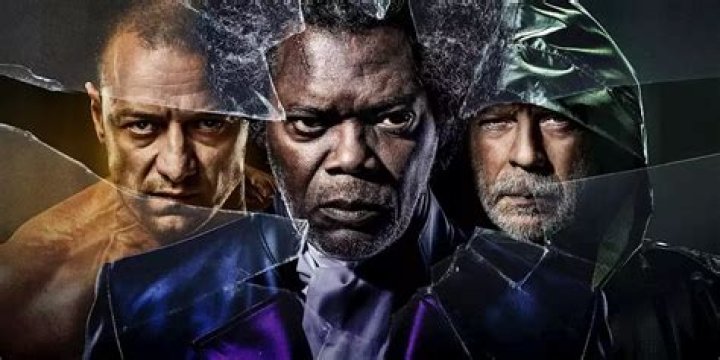
M. Night Shyamalan's Unbreakable trilogy is an auteur-driven superhero franchise, but the arrival of Split and Glass complicated its viewing order.
Summary
- The Unbreakable trilogy, also known as the Eastrail 17 7 trilogy, is a unique and grounded superhero franchise written and directed by M. Night Shyamalan.
- Split is a secret sequel to Unbreakable that cleverly connects the two movies through the development of Kevin Wendell Crumb's character and a surprise cameo by Bruce Willis.
- Glass serves as the culmination of the trilogy, bringing the characters and themes of Unbreakable and Split together in a collision of beliefs and worldviews, while also delving into the meta-narrative surrounding superheroes.
The Unbreakable trilogy order is complicated by its loosely connected spinoff, Split, and the big franchise crossover, Glass. Unbreakable is considered the first auteur superhero franchise, as all of its movies are written and directed by the same visionary filmmaker: M. Night Shyamalan. The Unbreakable movie trilogy, also known as the Eastrail 177 trilogy, takes influence from superhero comics, but it’s much more grounded in reality than the average superhero story. After he presented a real-world version of the superhero myth with Unbreakable, Shyamalan followed it up with a stealth sequel and then an ambitious crossover uniting the first two stories.
Most trilogies have convenient numbering to make their viewing order clear, like Spider-Man, Spider-Man 2, and Spider-Man 3, or Back to the Future, Back to the Future Part II, and Back to the Future Part III. Other trilogies make it more difficult for viewers to determine the watching order, as with the Cloverfield movies. With Split and Glass in the mix, the Unbreakable trilogy order is similarly tricky to figure out. Here is the proper viewing order of the Unbreakable trilogy and where Split and Glass fit in.
Unbreakable Trilogy: A Complete Timeline Of Events
With interconnected flashbacks and twist reveals from Unbreakable, Split, and Glass, the Eastrail 177 Trilogy timeline is pretty complicated.Unbreakable (2000)
Unbreakable Lays The Foundational Mythos For The Trilogy 16 Years Before Split
Unbreakable
- Release Date
- November 22, 2000
- Director
- M. Night Shyamalan
- Runtime
- 106 minutes
The Unbreakable trilogy kicks off, appropriately, with Unbreakable, which was released in 2000. Bruce Willis stars in the first installment as David Dunn, a security guard who discovers that he has superhuman strength after emerging from a deadly train crash unscathed. Samuel L. Jackson plays the villainous Elijah Price, a man with brittle bones who owns a comic book store. Going by the nickname “Mr. Glass,” he becomes David’s arch-nemesis. Unique for its time, Unbreakable offered a refreshingly realistic take on the superhero genre, and audiences responded enthusiastically to the concept, resulting in a worldwide gross of more than $248 million (via Box Office Mojo).
Unbreakableis the first movie in the trilogy and lays the foundational mythology by introducing a world that is subtly interwoven with the extraordinary. David Dunn's discovery of his superhuman abilities is presented as a real-world phenomenon, challenging the audience's suspension of disbelief. As Dunn explores the extent of his powers, the film meticulously plants the seeds of a larger narrative, hinting at a universe where such anomalies exist but are not recognized. Elijah Price, with his encyclopedic knowledge of comic book lore, serves as the catalyst that awakens Dunn to his true potential, drawing parallels to the mentorship often seen in superhero origin stories.
The connection to Split and Glass is primarily thematic, but becomes more explicit as the trilogy progresses. Unbreakable introduces the idea that superhumans walk among us, unnoticed — a concept that Split builds upon with Kevin Wendell Crum's emergence as The Beast. Unbreakable's subtle allusions to a broader conflict and its questioning of the nature of heroism and villainy lay the groundwork for the complex interplay between the characters that unfolds in the subsequent films.
Unbreakable is available to stream on Max.
Split (2016)
Split Was Originally A Secret Sequel To Unbreakable
Split
- Release Date
- September 26, 2016
- Director
- M. Night Shyamalan
- Cast
- Kim Director , Betty Buckley , Haley Lu Richardson , Brad William Henke , Anya Taylor-Joy , James McAvoy , Jessica Sula
- Runtime
- 1h 57m
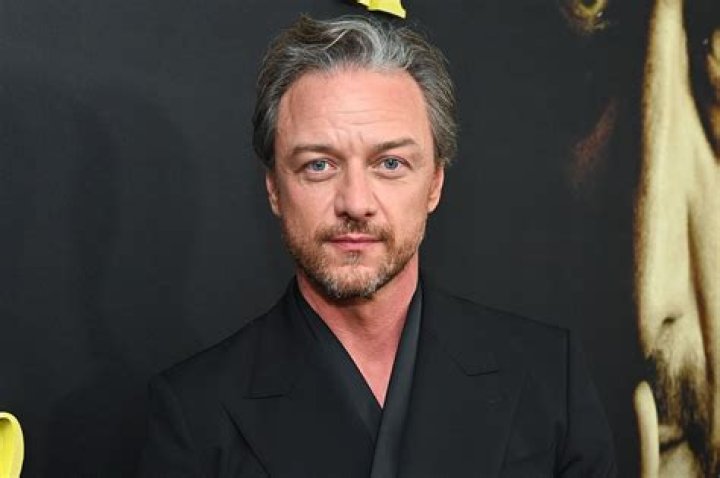
Sixteen years after Unbreakable became one of M. Night Shyamalan's biggest critical and commercial hits, the filmmaker followed it up with Split. One of the first movies to present a standalone supervillain origin story, Split stars James McAvoy as Kevin Wendell Crumb, a man with dissociative identity disorder who develops a personality with supernatural abilities called “The Beast.” Anya Taylor-Joy co-stars as Casey Cooke, a teenager kidnapped by one of Kevin’s personas to sacrifice to The Beast. The connection to Unbreakable isn’t apparent until the ending of Split when Bruce Willis appears in a surprise cameo reprising his role as David Dunn, who recalls a prior supervillain: Mr. Glass.
As the second movie in the trilogy, Split ingeniously lays the groundwork for its eventual convergence with Unbreakable through the meticulous development of Kevin Wendell Crumb's character. The narrative reveals the depth of Crumb's fractured psyche, hinting at a latent potential for superhuman abilities among his multiple personalities. As audiences watch the emergence of The Beast, they are presented with a dark reflection of David Dunn's indestructibility, creating a thematic and narrative symmetry between the two characters. This symmetry is Shyamalan's subtle thread weaving the films together, suggesting a shared universe where extraordinary abilities emerge under the strain of extreme human experiences.
Split's Alternate Ending Explained
M. Night Shyamalan's Split originally had a different ending - here's what happens in it, and why it was cut from the final version of the movie.The final act is a masterstroke that retroactively casts Split as a sequel to Unbreakable. The brief but potent cameo of Willis, referencing Mr. Glass, acts as a narrative bridge linking the two movies. This connection is more than a simple plot twist; it redefines the context of Split within a broader mythos. By placing Crumb within the same universe as Dunn and Price, Shyamalan creates a triptych of characters who represent different aspects of the superhero archetype: the unassuming hero, the fragile mastermind, and the monstrous villain. This revelation not only connects Split to Unbreakable but also sets the stage for Glass, promising a culmination of these interwoven stories.
Split is available to stream on Peacock.
Glass (2019)
Glass Sees The Previous Movies' Characters & Themes Converge
Glass
- Release Date
- January 16, 2019
- Director
- M. Night Shyamalan
- Runtime
- 129 minutes
The third move in the Unbreakable trilogy, Glass serves as the nexus where the paths of the super characters dramatically intersect, drawing together the disparate threads laid out in Unbreakable and Split. The final chapter of the Unbreakable trilogy and the last one to view in order is Glass brings the characters of Unbreakable and Split together with Willis returning as David, Jackson returning as Elijah, McAvoy returning as Kevin, and Taylor-Joy returning as Casey. The 2019 movie sees David, Elijah, and Kevin being detained in a psychiatric facility, where the authenticity of their superpowers is debated. Sarah Paulson plays Dr. Ellie Staple in Glass, a psychiatrist who believes they suffer from delusions of grandeur.
This convergence is not just a meeting of characters, but a collision of their fundamentally opposing beliefs and worldviews. The film's setting in a psychiatric facility acts as a crucible for these ideologies to be challenged both by the skeptical Dr. Ellie Staple and each other. It's here that the Unbreakable trilogy's overarching theme of belief versus doubt comes to a head, as each character is forced to confront the possibility that their extraordinary experiences may be mere delusions. The presence of secondary characters from the previous films, such as Dunn's son and Casey Cooke, further ties the narrative threads together, grounding the extraordinary elements in more personal, human connections.
Shyamalan also uses the Glass ending to delve into the meta-narrative surrounding superheroes, placing the film within a broader discourse on the nature of storytelling and myth-making. The film self-references comic book tropes, using them to structure the narrative and inform the characters' self-identity. Elijah Price, or Mr. Glass, becomes the orchestrator of this final act, positioning himself as the mastermind who understands the world through the lens of comic book logic. His actions bring to light the underlying question posed by the trilogy: Are these characters truly superhuman, or are they simply individuals with unique conditions that have been mythologized?
Where To Watch The Unbreakable Trilogy
The Unbreakable Movies Aren't All Available On A Single Service
Unfortunately, the Unbreakable trilogy isn't available to watch all on one streaming service, and they're somewhat scattered around. Unbreakable is available to watch on Max, where plans start at $9.99 per month. Split is available to watch on Peacock, where plans start at $5.99 per month. Glass isn't available to stream with a streaming service at all, but it is available to rent on Amazon for $3.79. Here's where to stream, rent, or buy every movie in the Unbreakable trilogy:
Movie | Stream | Rent/Buy |
|---|---|---|
Unbreakable | Max: $9.99pm | Amazon: $3.79/$17.99 |
Split | Peacock: $5.99pm | Amazon: $3.79/$14.99 |
Glass | N/A | Amazon: $3.79/$14.99 |